Animals | Interview with Experts in Animal Welfare—Prof. Clive Phillips and Dr. John Webster
Ms. Jaime Anderson, Head of Operations at MDPI’s UK office and DME of Birds (ISSN 2673-6004), recently interviewed Prof. Clive Phillips, the Editor-in-Chief of Animals (ISSN 2076-2615), and Dr. John Webster, who defined the “Five Freedoms” (https://www.mdpi.com/2076-2615/6/6/35), about their views on animal welfare and ethics, publishing practises, and the way that open access publishing facilitates the dissemination of research and enhances public knowledge, which ultimately impacts people’s daily decision making and can provide real benefit for animals’ quality of life. Without access to that knowledge, Phillips and Webster argue, science cannot be applied, and ethical change cannot be enacted.
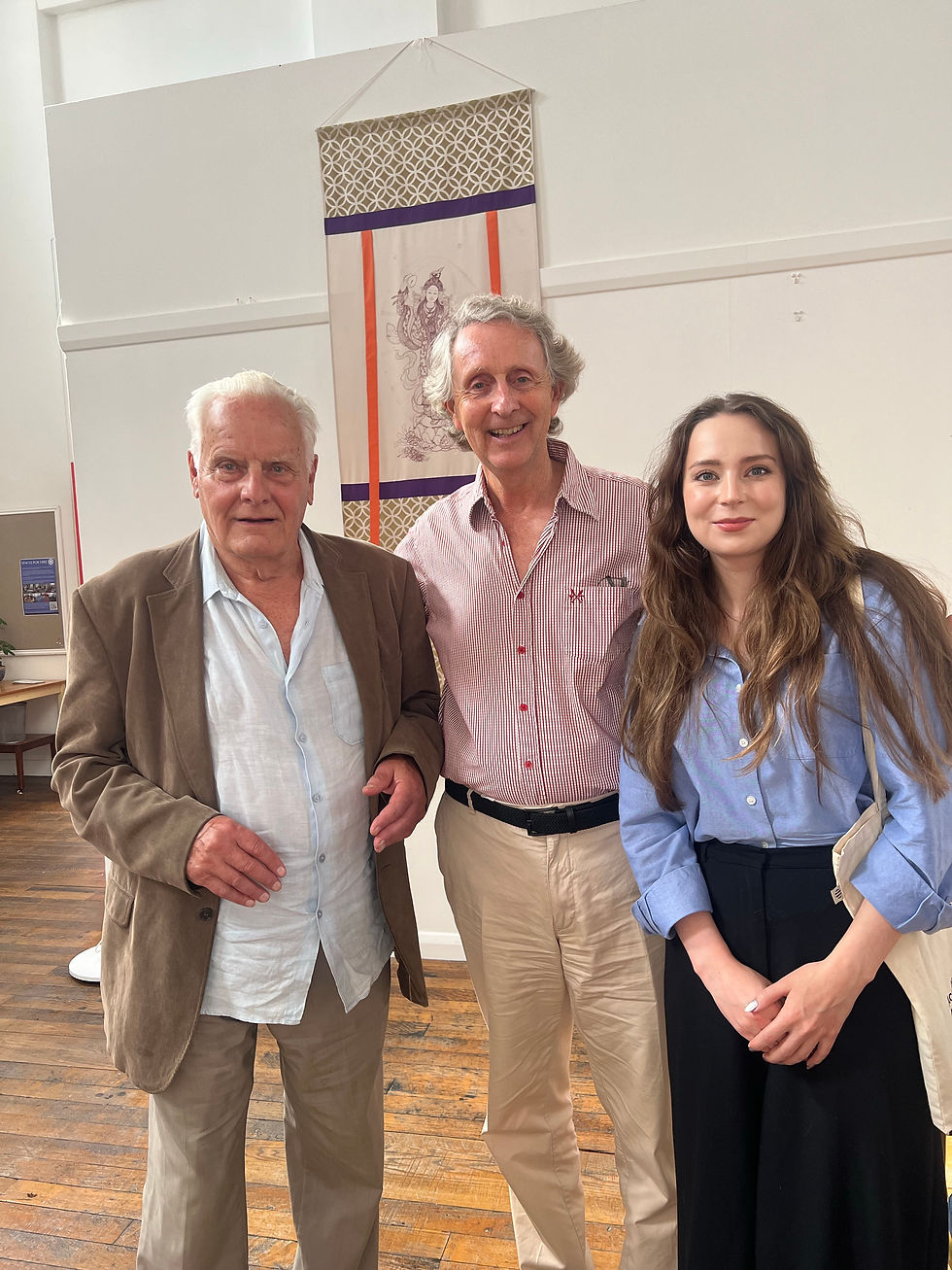
Prof. Clive Phillips is a widely known and respected expert in animal welfare and ethics. His early work focused on European and Australian livestock production systems, as well as the effects of nutrient and toxic environments on the welfare of farm animals, with emphasis on the heavy metal contamination of farm land. More recently, Prof. Phillips has specialised in the global animal trade, advising compassion and concern as an antidote to animal cruelty. Dr. John Webster is a prominent author and researcher across the fields of animal welfare and veterinary science, and he is best known for his work extending animal needs beyond the paradigmatic “Five Freedoms” to include the “Five Provisions”, which aim to provide “A Life Worth Living”. Dr. Webster’s pioneering work in animal behaviour, ethics, and animal husbandry has reconfigured how animal welfare is defined, measured, and legally protected across the globe.
Interview with Clive Phillips:
In previous interviews with MDPI, Prof. Phillips has shared his belief that “we need to find out whether there is a reason for animal life, and if so, what it is, since this will help us to work out what we, as humans, owe to other creatures and how we should treat them”.
As well as this more fundamental question, Prof. Phillips is concerned by the standard of welfare which agricultural systems, particularly cattle and sheep farms, provide their animals. He believes the most pressing questions for early-career researchers and animal welfare enthusiasts should be about “more than just welfare, which is all about the animals’ experiences in their environment”, and should as well ask the questions “what should we do to animals”, and “how can we the earth’s resources be best used for the benefit of animals”.
The role of publishers in promoting public awareness and keeping animals well
With developments in our understanding of the subjective, perceptual experiences of animals in mind, Prof. Phillips also believes research focus is likely to shift towards wildlife, and when asked about the species he feels are underserved by the current literature, voiced his concern for invertebrates, mentioning his belief that “we have a responsibility to all animals, not just the vertebrate animals” we are “legally” required to consider. Mentioning how “we’re beginning to recognise that some invertebrates are quite sentient… which was not recognised before”, Prof. Phillips touches on the crux of what open access publishers like MDPI aim to achieve. Prof. Phillips notes that because aquatic and marine animals have been “out of sight and out of mind, no one knew what we were doing to them”, [exposing] the crucial role that publishers can play in raising public awareness of unrecognised animal cruelty and the exploitation of our natural world. Here, Prof. Phillips promotes the idea that changing societal recognition of other species, and widening the scope of society’s understanding of the natural word and our ethical duty towards it, is only possible with access to front-line research.
In essence, Prof. Phillips demonstrates how public opinion is shaped by research, outlining how a stronger collective understanding of the world around us is made possible through open access to high-quality scientific research.
“I think it’s hard for people to understand that animals are sentient or feel pain, and when I talk to people about this, I remind them that in the 1980s we only really knew for sure that humans feel pain, but now we recognise perception of pain in a wide variety of vertebrate and invertebrate species.”
We then asked about advice for aspiring researchers who want to have a positive impact on animal welfare. Prof. Phillips shared his belief that the best way for budding researchers to move forward is to identify high-priority research areas and gaps in current thinking. He believes his new book (Letters at Sea: Long-Distance Transport of Farm Animals) will help bring that sense of direction into sharper focus, and hopes it will bring passionate people into the field of animal transport, stating that “there are obstacles but there’s a lot of reward for the improvement of conditions” of farm animals in particular. Prof. Phillips hopes that “public pressure will require changes to be made” to animal welfare standards and improve their conditions, citing the huge improvements that have been made to the quality of life of British hens.
He also observes that the growth of the multimedia development parallels the growth in the animal welfare movement, suggesting that OA supports a continuation of that boom.
Prof. Phillips believes that “public pressure will carry on growing”, as we have “become a more empathic society”, attributing a growth in care and concern for animal welfare to “multimedia development”, which has ensured “the public are now so much more aware of all the problems [related to animal welfare and ethics] than they were in the 1960s and 1970s”. According to Prof. Phillips, “people were totally unaware of what was going on” in relation to intensive calf production systems, for example, and didn’t recognise that these highly sentient animals needed better conditions.
Considering the acceptance of animal welfare and wellbeing into public consciousness, Prof. Phillips elaborated on the importance of academic publishers, and editors, to the field of animal welfare and ethics. Prof. Phillips’ editorial work for MDPI’s Animals is a reflection of his belief in the essential role that academic publishers play in upholding good animal standards, including in research. High-quality science is vital for animal welfare improvement, because the issues are often complex and impacting on many stakeholders. Animals “broke the mould of publishing high-quality animal science only for scientists, largely through its digital open access nature”.
Prof. Phillips also believes “authors should be free to publish all their research results, as long as it is statistically and ethically sound”, accepting “incremental approaches to change in all articles that Animals publishes” as a way to effect real, long-lasting developments within the field. He also welcomes groundbreaking blue skies research, and the “publish or perish” culture, which makes current academics justify their research publicly. Prof. Phillips has a flexible and open-minded approach to publishing which mirrors the sentiments of MDPI, recognising that Animals had “the foresight to broaden beyond traditional animal science” to accept high-quality social science related to animals too, as long the research is strong and contributes something meaningful to the field. This is a unique quality for Animals, which the new publishing models with a “broad perspective” are able to foster.
One of the many impactful changes introduced by Prof. Phillips was the inclusion of a “Simple Summary” at the start of every article published in Animals. One of Prof. Phillips’ attraction to Animals was the journal’s ability to “open up the animal welfare literature for everyone to see” and for the public the initial summary is the most important part of the article, because of its capacity to make scientific literature engaging and digestible for anyone reading it. To Prof Phillips’ mind, these summaries boost transparency to the public, and allow readers to quickly understand the importance of the research, including getting a sense of its meaning for animal ethics, complimenting the scientific detail provided through the traditional publishing model of an Introduction, description of the Methodology, outlining the Results, and providing a Discussion of their meaning.
Interview with Dr. John Webster:
We interviewed Dr. Webster at the launch of his book (Letters on Animal Welfare from the Road to Eden), and investigated his views on the emotional motivations for free and open access to cutting edge scientific literature. Dr. Webster stated that “these very emotional problems” like animal welfare and ethics “need more light and much less heat, and that’s where science does help if people will listen to it”. Dr. Webster advocates for “action rather than just noble thought”, commending the application of animal welfare and ethics research into daily decision making.
Public knowledge as a driver of change
Like Prof. Phillips, Dr. Webster is a proponent of public knowledge, and believes that the application of science is achieved through public action, the main driver of change. Dr. Webster believes improvements to animal welfare have “been operating largely through the private sector, through supermarkets competing to sell” their goods, explaining how “animal welfare is a come-on” which “brings people into the supermarket so they buy their beans and soap powders” from the same place. Dr. Webster doesn’t see this as a negative, however, noting instead that “supermarkets compete on animal welfare grounds reasonably well” precisely because they are profit-driven, echoing Prof. Phillips’ praise of the standardisation of free-range conditions for British hens.
Interestingly, Dr. Webster also touched on the impact that multimedia developments have had on overall societal recognition of animal welfare and ethics issues. Dr. Webster cited David Attenborough, who is “so much in love with the natural world” as a propellent of public access to knowledge. In Webster’s mind Attenborough “did more for our understanding of the natural world than anybody” through the combined efforts of genuine passion and free broadcasting at the point of use, through the BBC. Open access publishing functions as a continuation of that blooming, blossoming access to new and exciting information which reconfigures our thinking and, as Dr. Webster articulates, that levelling of societal baseline knowledge is what ultimately drives large attitudinal shifts towards animal ethics, and has the potential to change the quality of animals’ lives as a result.
The future of animal welfare and ethics research
When asked about his recommendations for researchers looking for a new project, Dr. Webster was a firm proponent of research which “is designed to achieve a better understanding of animal minds, in a way that’s not corrupted by our preconceptions”. Like Prof. Phillips’ suggestion that researchers must move beyond questioning just “how the animal is coping with its environment”, Dr. Webster suggested that “we know enough about [animal] bodies”, and should instead investigate the extent of the workings of their minds, specifically “their ability to think ahead, to piece information together, to have the properties of perception and therefore planning and learning to cope, and if they can’t cope, suffer”.
These disruptive perceptions of animals’ internal worlds completely reconfigure our understanding of human relationships to animals, and our duty towards those that we as human beings keep. Dr. Webster goes so far as to question the ethical justification for keeping animals in any capacity, stating how “we define animals as game, farm, vermin, pet according to our needs, but it’s exactly the same animal; it’s up to how we define them, which happens according to our needs”.
According to Dr. Webster, “there is no exception to species that are clever at some things that the matter the most, and ignorant to everything else, and that applies to humans just as much as any other animal”. This shift away from human-centred thought permeates Dr. Webster’s worldview, and it was interesting to hear his opinion on the characteristic actions of animals as information gathering tools which demonstrate their sentience. Webster “would love to know how dogs interpret smells” and “recognise them as different, carrying information that we can’t even being to think of”. He also expressed his interest in the “cognitive abilities” of crows, which are more advanced than those of the chimpanzee “in terms of tool making and skills”, pointing out how little is known about their “emotional complexity” in comparison to our understanding of apes’ emotions.
His last book, Animal Welfare: Understanding Sentient Minds and Why It Matters “was designed to be more broadly read”, because pet and animal welfare “just needs the application of compassion”, It is this pursuit of the dissemination of knowledge to elicit compassion which has been instrumental in Webster’s movement towards open access publishing. As Webster has made clear, openness is essential for animal welfare and ethics in particular, because although the science itself is important, the ultimate purpose of the research is its application, which is only achievable through public awareness.
Closing thoughts
We are grateful to Dr. Webster and Prof. Phillips for taking the time to answer our questions, and for their thoughtful and enthusiastic answers. If you’re interested in submitting work to or reading work from Animals, see the journal homepage.
Professor Philips’ latest Special Issue in Animals, “Animals in 2100”, which focuses on the future of animals on planet Earth, is currently open to submissions: https://www.mdpi.com/journal/animals/special_issues/G0D270V00S.